Are Americans Overpaying for Italian Property? The Foreign-Buyer Premium, Agent Fees and Closing Costs

November 2026
Quick Answer
Americans often overpay in Italy, but rarely where they expect. No reliable data proves a fixed foreign-buyer premium. The measurable losses are in what the price does not show: new-build VAT of 10% to 22% on the full price, agent fees of about 3% plus VAT, currency spreads, and weak negotiation. Check every price against the official OMI ranges and model total cost, not the asking price.
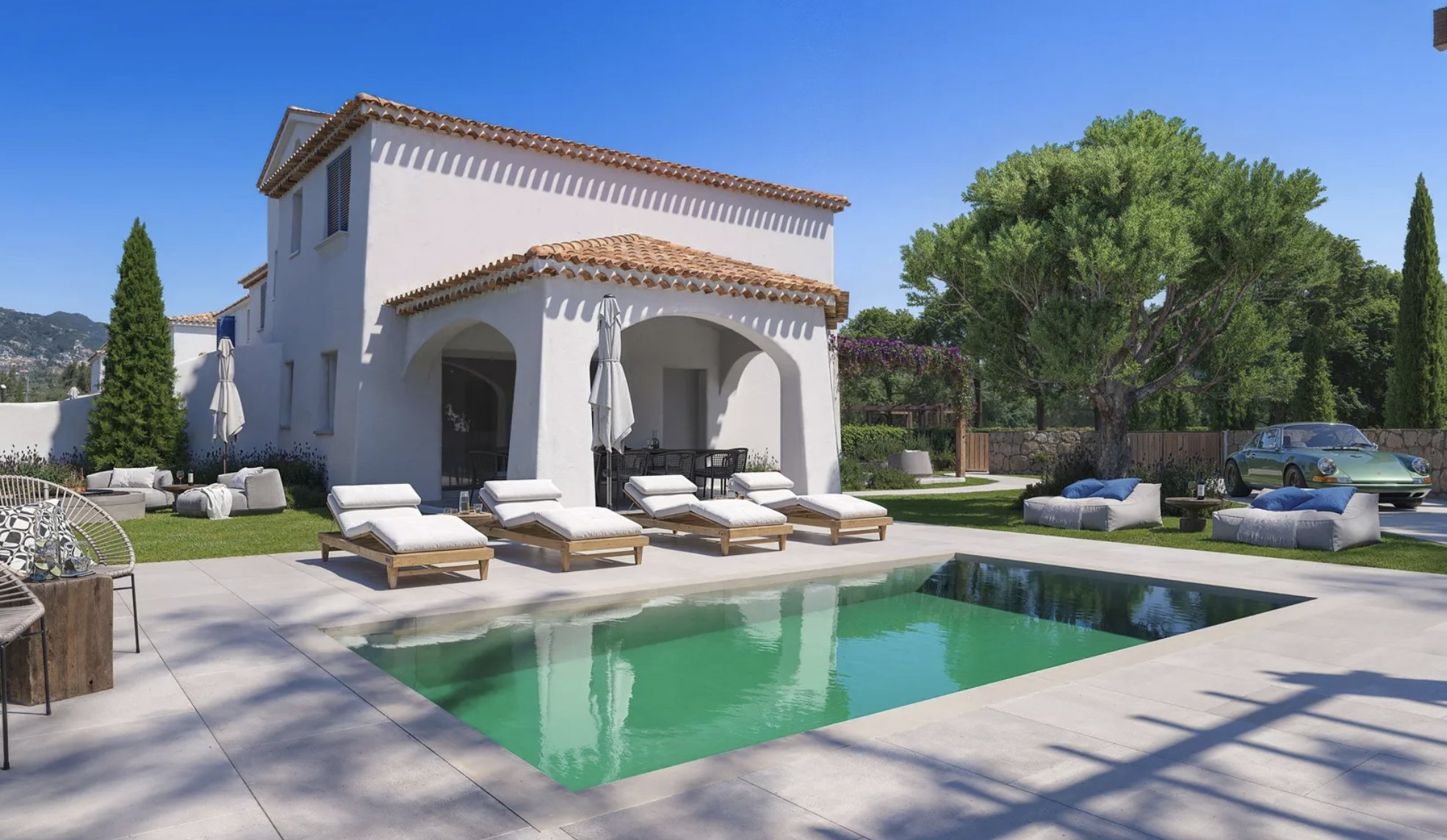
The common claim is that Italians quote foreigners higher prices. It may be true in some places, but nobody publishes a reliable measure of it, and the claim distracts from losses you can actually calculate. This article separates what can be proven from what cannot, shows a worked closing-cost example for a new-build villa like the one above, and gives a method for testing a price before you offer. It builds on the costs in our buying process guide and the ongoing costs in our cost of owning guide.
The Foreign-Buyer Premium: What Is Provable
I have not found a published study that measures how much more foreign buyers pay than Italians for the same house, and I would distrust anyone who quotes a clean percentage. What can be said is narrower. Asking prices in places popular with foreign buyers are negotiable. Listings on international portals are often priced in dollars or pounds from a euro figure the seller set, so the headline number also moves with the exchange rate. And a buyer who does not know the local price level has little to negotiate with. The answer is not to assume a premium. It is to bring an independent reference to the table.
The Reference Italy Publishes: OMI Price Ranges
The Agenzia delle Entrate (Italy's revenue agency) publishes quotazioni OMI through its Osservatorio del Mercato Immobiliare. For each zone and property type, OMI gives a minimum and maximum price per square metre, updated every six months. Facile.it explains the first-half 2026 release, and the data are available on the Agenzia delle Entrate site. Multiplying the area by the zone's range gives an indicative value band.
OMI has limits you must respect. The ranges describe average properties in a zone, not an individual house, and they ignore floor, exposure, energy class and finish. They are not actual transaction prices. A new villa with a pool and sea access can sit above the range for good reasons, and a house needing renovation can sit below it. Use OMI to spot an outlier, not to set a price. Pair it with comparable sales from your attorney and a surveyor's view of the building.
Where the Money Actually Goes: A Worked Example
The table below uses a hypothetical 700,000 euro purchase, close to the new-build villa pictured above, and three structures. All figures are illustrative assumptions as of November 2, 2026: a cadastral value of 250,000 euros for the resale case, notary and attorney fees at the midpoint of commonly cited ranges, and an agent paid by the buyer only in the resale case. Rates change with each budget law.
| Cost | Resale from a private seller | New build, 10% VAT | New build, 22% VAT (luxury category) |
|---|---|---|---|
| Tax on purchase | 9% of 250,000 cadastral value = 22,500, plus 100 fixed | 10% VAT on 700,000 = 70,000, plus 600 fixed | 22% VAT on 700,000 = 154,000, plus 600 fixed |
| Notary | 4,000 | 4,000 | 4,000 |
| Agent (3% plus 22% VAT) | 25,620 | Not included | Not included |
| Attorney | 3,500 | 3,500 | 3,500 |
| Total on top of price | 55,720 (8.0%) | 78,100 (11.2%) | 162,100 (23.2%) |
Sources for rates: reported 2026 rates for registration tax, VAT and fixed taxes (RealEstate.IT, European.realestate); agent commission of about 3% plus VAT (adviser sources); attorney range from our buying process guide. Resale registration tax uses the prezzo-valore mechanism, which applies only if requested in the deed and the property qualifies. Developers often pay their own agents; confirm who pays in your contract.
The new-build trap
The table shows the point most American buyers miss. On a resale from a private individual, the registration tax is usually calculated on the cadastral value, which advisers report is commonly 30 to 50% below market price. On a new build from a VAT-registered developer, the tax base is the full price. A 700,000 euro villa can therefore carry tens of thousands of euros more in tax than a 700,000 euro resale, and the gap becomes enormous if the property falls into a luxury cadastral category such as A/8 (villas). Ask early which cadastral category the property has and whether VAT is payable, because this is not visible from the listing.
Want a total-cost estimate before you make an offer? Peter can connect you with a vetted Italian attorney and notary to price the purchase structure, taxes and fees for a specific property. Reach out at petertumbas@bhhsne.com or 412-225-0598, or submit a private inquiry.
Agent Fees: Where You Can Push Back
Italian agents are commonly paid by both sides, typically about 3% plus VAT each, and the rate is negotiable. Three points deserve attention before you sign anything. First, confirm the calculation base and VAT treatment in writing. Second, read any exclusivity clause: lawyers quoted by The Local warn that using another agent during an exclusive period can still leave you owing the first agent's fee, typically 2 to 5% of the price. Third, ask what happens to the fee if the sale fails after the preliminary contract.
The Friction Costs Nobody Puts in the Listing
- Currency conversion. On a 700,000 euro purchase, every 1% lost to the exchange rate and wire fees is 7,000 euros. A 2% total spread, an illustrative assumption, costs 14,000 euros. Compare quotes from your bank and a specialist transfer provider before wiring, and keep the funds trail documented, as covered in our bank account guide.
- Power of attorney and translation. Buyers who cannot attend the deed use a power of attorney, covered in our power of attorney guide, and a certified translator may be required.
- Surveyor. The notary checks the paperwork, not the building. A geometra's inspection before you commit can be the cheapest negotiation tool you have.
- Binding offers. A binding proposal can forfeit a deposit, often 5 to 10%, and may expose you to paying the seller double if you withdraw. Do not pay or sign before a lawyer reviews the contract.
Put the Full Price in the Deed
Lawyers advise that the full agreed price should appear in the transfer deed, and declaring less than you paid is unlawful. The declared price also becomes your cost basis when you sell, which affects the capital gain calculation described in our selling guide and the resale picture in the exit problem analysis. Have your attorney confirm that the deed matches the agreement.
A Price-Testing Method Before You Offer
- Find the OMI range for the exact zone and property type, and multiply by the area.
- Ask your attorney for comparable recent sales, not just current listings.
- Commission a surveyor before negotiating, and use the findings to adjust the price.
- Ask who the seller is. A private seller means registration tax on cadastral value. A developer means VAT on the full price.
- Total the costs using the table above with your own numbers, and compare two properties on total cost, not asking price.
- Lock the exchange plan and get written transfer quotes before the compromesso.
Frequently Asked Questions
Do foreign buyers pay more for property in Italy?
There is no reliable published measure of a foreign-buyer premium, so any claim of a fixed percentage should be treated with caution. What can be shown is that asking prices in foreign-buyer markets are negotiable, that the official OMI price ranges published by the Italian revenue agency give an independent reference, and that costs such as new-build VAT, agent fees and currency conversion can add far more than buyers expect.
Who pays the agent commission when buying property in Italy?
Both sides commonly pay. Commission is typically reported at about 3% plus VAT from the buyer and about 3% plus VAT from the seller, and it is negotiable. Confirm the calculation base, the VAT treatment, when the fee becomes payable and what happens if the sale fails after the preliminary contract. An exclusivity clause can leave you owing a fee of roughly 2 to 5% if you use another agent.
What taxes do I pay when buying an Italian second home?
It depends on the seller. Buying from a private seller, a second home pays 9% registration tax, generally calculated on the cadastral value rather than the price if the buyer requests that treatment, plus small fixed taxes. Buying from a VAT-registered developer, you pay VAT on the full price: 10% for a standard second home or 22% for luxury cadastral categories A/1, A/8 and A/9, plus fixed registration, mortgage and cadastral taxes.
How can I check whether an Italian asking price is fair?
Use the OMI quotations published by the Agenzia delle Entrate, which give a minimum and maximum price per square metre for each zone and property type, updated every six months. Multiply by the property's area for an indicative range. OMI values describe average properties in a zone, not an individual house, so also ask your attorney for comparable recent sales and have a surveyor assess the building.
Should the full purchase price appear in the Italian deed?
Yes. Lawyers advise that the full agreed price should appear in the deed, and declaring less than you paid is unlawful. The price you declare also becomes your cost basis when you sell, which affects any capital gains calculation. Have your attorney confirm that the deed matches the agreement.
Pricing an Italian Purchase?
Peter can connect you with vetted Italian legal and notary specialists so the total cost is calculated before you make an offer.
Submit an Inquiry Buying Guide