The Italian Villa Exit Problem: Why Buying Is Easy and Selling Is Hard for Americans

October 2026
Quick Answer
Italian villas are easier to buy than to sell. The buyer pool for multimillion-euro estates is narrow, closings stall when the building does not match its official records, agents typically take about 3% plus VAT from each side, and Superbonus renovations can trigger a resale tax. Buy only if the house still makes sense with a slow, conservative sale in year eleven.
Every conversation about an Italian villa covers the purchase price, the renovation and the rental income. Almost none covers the sale. This article looks at the exit: who actually buys expensive Italian houses, what stops a sale from closing, a resale tax most American buyers have never heard of, and how to test an exit before you sign. The tax on the gain is covered separately in our capital gains guide, so this piece concentrates on what that guide does not: liquidity, paperwork and timing.
The Buyer Pool Gets Thin Fast
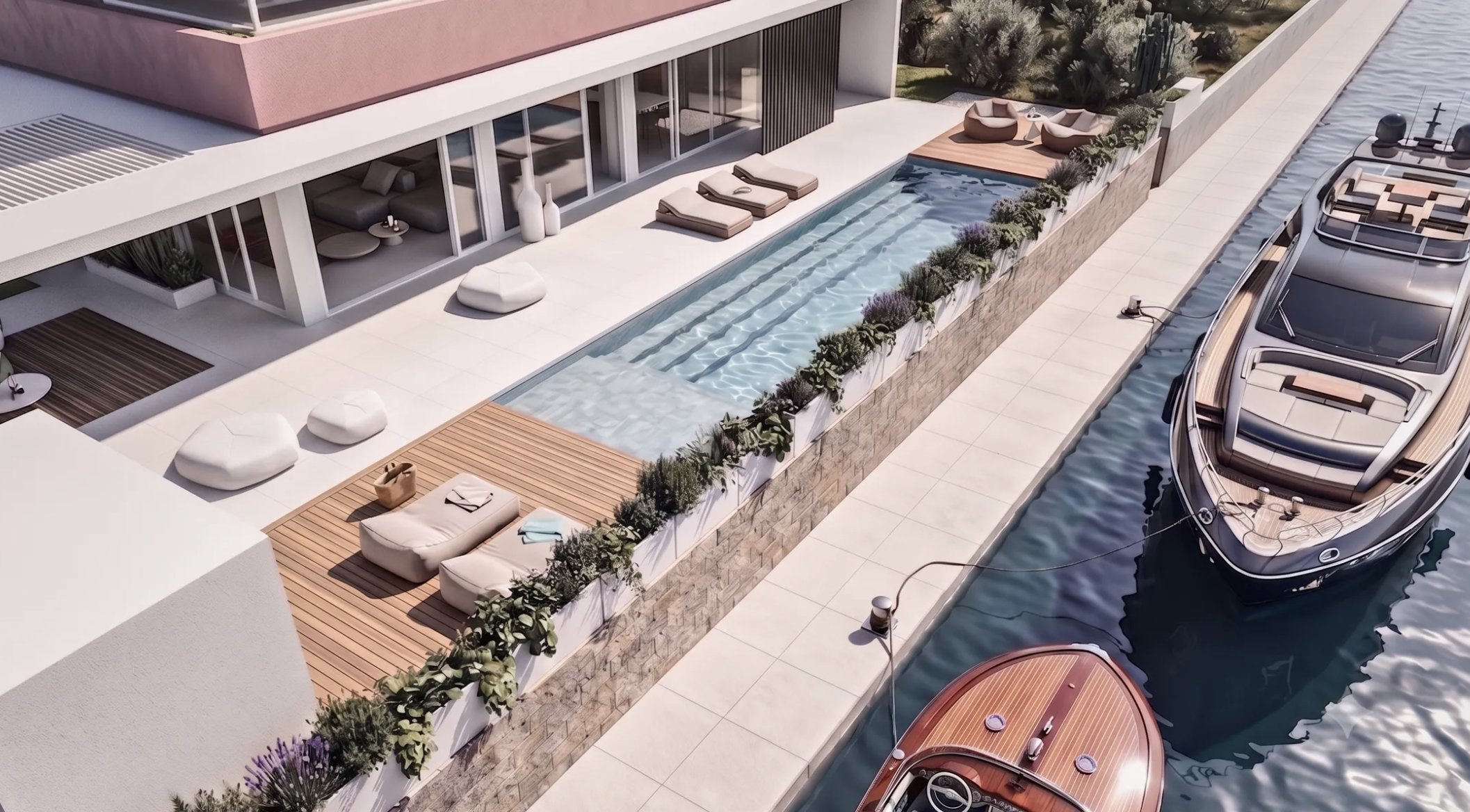
A buyer of a Sicilian villa with a private jetty, like the one pictured above, is not selling to the typical foreign buyer. According to a report published by Idealista on October 15, 2026, citing Corriere della Sera, OMI and Gate-away data, Americans account for more than one in five foreign purchase enquiries, ahead of the UK at 14% and Germany at almost 10%. The same report puts the average prospective foreign buyer's budget at about 450,000 euros, with 44% expecting to spend under 100,000 euros, and says most enquiries are for renovated, independent apartments over 120 square metres.
Put those figures next to a 2.7 million dollar villa and the problem is visible. The people searching are overwhelmingly looking for something far cheaper and more conventional. A trophy house depends on the small slice of buyers who can afford it, want that particular location and are searching at the moment you list. Those are enquiry figures, not sales data, but they describe the demand a seller has to find.
Why Italian Sales Stall at the Paperwork
The most common reason an Italian sale fails to close is not price. It is the building. Italy requires the physical property to match two sets of official records, and old houses frequently do not.
| Item | What it proves | Typical problem |
|---|---|---|
| Visura catastale | The property is correctly registered in the seller's name | Outdated ownership or inherited titles never updated |
| Technical report (RTI) | The floor plan on file at the catasto and the permits at the comune match what exists | Walls moved, terraces enclosed, pools or outbuildings never permitted |
| APE energy certificate | Required before listing | Missing or expired |
| Sanatoria | The legalization process for discrepancies | Adds cost and time, and must be completed before the deed |
Source: Italian sales process as described by advisers, October 2026. Requirements vary by municipality; confirm with an Italian attorney or geometra.
Advisers report that even a small mismatch can stop the notaio from signing the deed. A buyer of a renovated villa inherits this risk. The cleanest protection is to have a technician check the records against the building before you buy, because the same defect that blocks your purchase today blocks your buyer in ten years. The notaio, compromesso and rogito guide explains the purchase side of the same process.
What Selling Actually Costs
- Agent commission. Typically reported at about 3% plus VAT, usually paid by both buyer and seller unless negotiated differently.
- Deposit mechanics. At the compromesso the buyer usually pays a 10 to 20% confirmatory deposit. If the buyer withdraws the seller keeps it, and if the seller withdraws the seller returns double.
- Corrections. Technical report, sanatoria and any works needed to align the records.
- Language. A certified translator is required at the rogito if the seller does not speak Italian.
- Time. One adviser reports an average of roughly 165 to 185 days to sell residential property in Italy in 2026. I have not found a reliable published average for villas and estates, which is itself a warning: there is no good data on how long the expensive ones take.
The Superbonus Resale Tax Most Buyers Miss
Italy's Superbonus renovation incentive financed large numbers of renovations, often through the invoice discount (sconto in fattura) or sale of the tax credit. The 2024 budget law (Law 213/2023, article 1, paragraphs 64 to 67) added a rule affecting later sales. Reports describe it as a 26% tax on the gain when a property that benefited from Superbonus works is sold within ten years of those works being completed, with Agenzia delle Entrate circular 13/E of June 2024 giving operational guidance. Sources say it can apply even when the works were only on the building's common parts, and that inherited or gifted property may fall outside it, though the exact scope is described briefly and should be confirmed.
This matters in two ways. A seller of a recently renovated property may face a tax that raises the lowest price they will accept. A buyer of any renovated Italian building should ask whether Superbonus was used, because it can change both the seller's position and your own exit. Have a commercialista confirm the treatment before you sign.
Want an exit test on the house you are considering? Peter can connect you with a vetted Italian technician and attorney to check the records, the permits and the resale picture before you offer. Reach out at petertumbas@bhhsne.com or 412-225-0598, or submit a private inquiry.
Five Things That Quietly Narrow Your Exit
- A price built on rental income. Rules can change after you buy. Florence widened its ban on new short-term rentals in 2026, as covered in our short-term rental crackdown analysis. A buyer paying for rental income that cannot transfer will not pay your price.
- A tax benefit that ends. The 7% regime lasts ten years and cannot be renewed. Our 7% analysis explains the year-eleven step up. A house bought for the regime is often a house you must decide about in year eleven.
- Local buyer restrictions. The Idealista report notes that in South Tyrol municipalities where more than 10% of homes are second homes, buyers who do not live in the province cannot purchase newly built or fully renovated homes. Check whether your target area has restrictions on who may buy.
- Heirs without a plan. Italian inheritance can leave several heirs co-owning one house, and the 2025 limits on citizenship by descent mean heirs may have no route to citizenship, as covered in our citizenship analysis. Our inheritance guide covers the succession rules.
- Unusual features. A private jetty, a large pool, a high-tech system or a very specific design narrows the field further. Maritime and coastal features may also carry their own permits and concessions that a buyer will examine closely.
An Exit Scorecard by Market
The table below uses foreign enquiry rankings from the Idealista report for the demand signal. The exit read is my own judgment, not a measured sales statistic.
| Market | Foreign demand signal | Exit read (judgment) |
|---|---|---|
| Lake Como and Lombardy | Como is the top province for foreign interest; Lombardy is third among regions | Deeper pool, still thin at the top end |
| Tuscany | First among regions; Lucca second and Perugia third among provinces | Deeper pool for well-documented farmhouses |
| Sicily | Second among regions | Mixed: strong coastal interest, thin inland |
| Puglia (Ostuni) | Ostuni is the most requested individual destination | Deeper for renovated property in demand towns |
| Ultra-prime coast (Porto Cervo, Portofino) | Top OMI prices near 21,000 to 22,900 euros per square metre | High prices, very few buyers |
| Interior southern villages | Low enquiry volume | Thin; plan to hold |
Demand figures from the Idealista report of October 15, 2026. In small municipalities where few homes change hands, price statistics should be read with particular care.
Buy It as If You Will Own It for Ten Years
- Have the records checked first. A technician compares the catasto plan and permits with the building before you offer.
- Ask about Superbonus and any recent works, and keep the invoices.
- Strip out the rental assumption. Would you still pay this price if the house could never be rented?
- Model a slow sale. Use a conservative price, a long time on the market, 3% plus VAT in agent fees and the cost of corrections.
- Plan for year eleven. If the tax regime ends or your plans change, decide in advance whether you hold, sell or hand the house on.
Frequently Asked Questions
How long does it take to sell a villa in Italy?
One adviser reports an average of roughly 165 to 185 days for residential property in Italy in 2026, but no reliable published average exists for villas and estates specifically. High-priced and rural properties sell to a much narrower pool of buyers, so a buyer should plan for a longer and less predictable sale than an apartment in a major city, and avoid depending on a fast exit.
What commonly stops an Italian property sale from closing?
The most common blocker is a mismatch between the physical property and its official records. The land registry (catasto) floor plan and the municipal planning permits must match what exists. Advisers report that even a small discrepancy can prevent the notaio from signing the deed until it is corrected through a sanatoria process. A seller also needs a valid energy certificate (APE) before listing.
What does it cost to sell property in Italy?
Agent commission is typically reported at about 3% plus VAT, and it is usually paid by both seller and buyer unless negotiated differently. The seller also pays for any technical report, corrections to records and a translator if the seller does not speak Italian. Capital gains tax is a separate question: gains are generally exempt after five years of ownership, as covered in our capital gains guide.
What is the Superbonus resale tax?
Under the 2024 budget law (Law 213/2023), a property that benefited from Superbonus renovation works can trigger a 26% tax on the gain when sold within ten years of the works being completed. Reports say it applies to owners who used the invoice discount or credit transfer, covers works on a building's common parts, and may not apply to inherited or gifted property. Anyone buying or selling a renovated Italian property should ask whether Superbonus was used and confirm the treatment with a commercialista.
How can I test whether a villa will be easy to sell before I buy it?
Ask for the cadastral and planning documents and have a technician confirm they match the building. Check which kinds of buyers actually inquire in that area, not just which towns are famous. Confirm any rental permission that supports the price. Model a sale in year eleven with a conservative price and a long time on the market, and only buy if the purchase still makes sense without a fast resale.
Thinking About the Exit Before You Buy?
Peter can connect you with vetted Italian technical, legal and tax specialists so the resale picture is checked before the purchase, not after.
Submit an Inquiry Selling Guide