Milan's Wealth Boom Is Pushing American Buyers Toward Tuscany and Como

September 2026
Quick Answer
Milan added roughly 4,000 high-net-worth residents since 2020 and now has almost no liquid inventory below 40,000 EUR per square meter in its core. That scarcity is not staying contained. It is pushing capital and buyer attention into Lake Como and Tuscany, both of which are already seeing outsized American demand. For a 1 to 3 million EUR American buyer, Milan itself is now largely the wrong market. The overflow markets are the opportunity.
Milan's luxury market has spent three years absorbing a wave of wealth that most American buyers never see reported in dollar terms. What gets less attention is where that pressure goes once Milan runs out of room, and the answer is not staying inside Milan's city limits. It is landing in two markets this site already covers in depth: Lake Como and Tuscany, both of which show a documented American buyer preference that predates this cycle.
Milan Ran Out of Room First
Roughly 3,983 high-net-worth individuals relocated their tax residence to Italy between 2020 and 2023, and Milan, Italy absorbed the largest share of that inflow. Henley & Partners' 2025 wealth report puts Milan at approximately 17 billionaires and 115,000 millionaires, a concentration that now sits closer to London or Paris than to any other Italian city. The city's own supply has not kept pace. Most prime inventory sits inside historic centre buildings that require full renovation or unit combination before resale, and Italian owners rarely sell family-held apartments at all, which keeps turnover structurally low.
The price signal is unambiguous. The Quadrilatero della Moda, Milan's super-prime core, now trades near 40,000 EUR per square meter. Brera, one step down in prestige but still central, runs closer to 18,500 EUR per square meter. Properties priced between 3 and 6 million EUR in genuinely prime locations sell quickly when they appear at all, because so few do. This is a market built for the buyer relocating tax residency under Article 24-bis, Italy's flat tax regime for new residents, which rose to 300,000 EUR per year in the 2026 Budget Law. It is not a market built for an American buyer with 1 to 3 million EUR looking for a lifestyle property.
Where the Overflow Is Actually Landing
Milan's scarcity has a documented release valve. Lake Como and Lago Maggiore, both within an hour of the city by car, are absorbing buyers and capital that Milan itself can no longer accommodate. This is not a coincidence of geography. It is the direct consequence of a wealthy buyer pool that wants a Milan-adjacent life without competing for Milan's near-zero inventory. Villa frontage on Lake Como carries its own scarcity, since lakefront parcels are finite and rarely change hands, but the entry point starts closer to 2 million EUR rather than the 3 to 6 million EUR band that defines Milan's prime core.
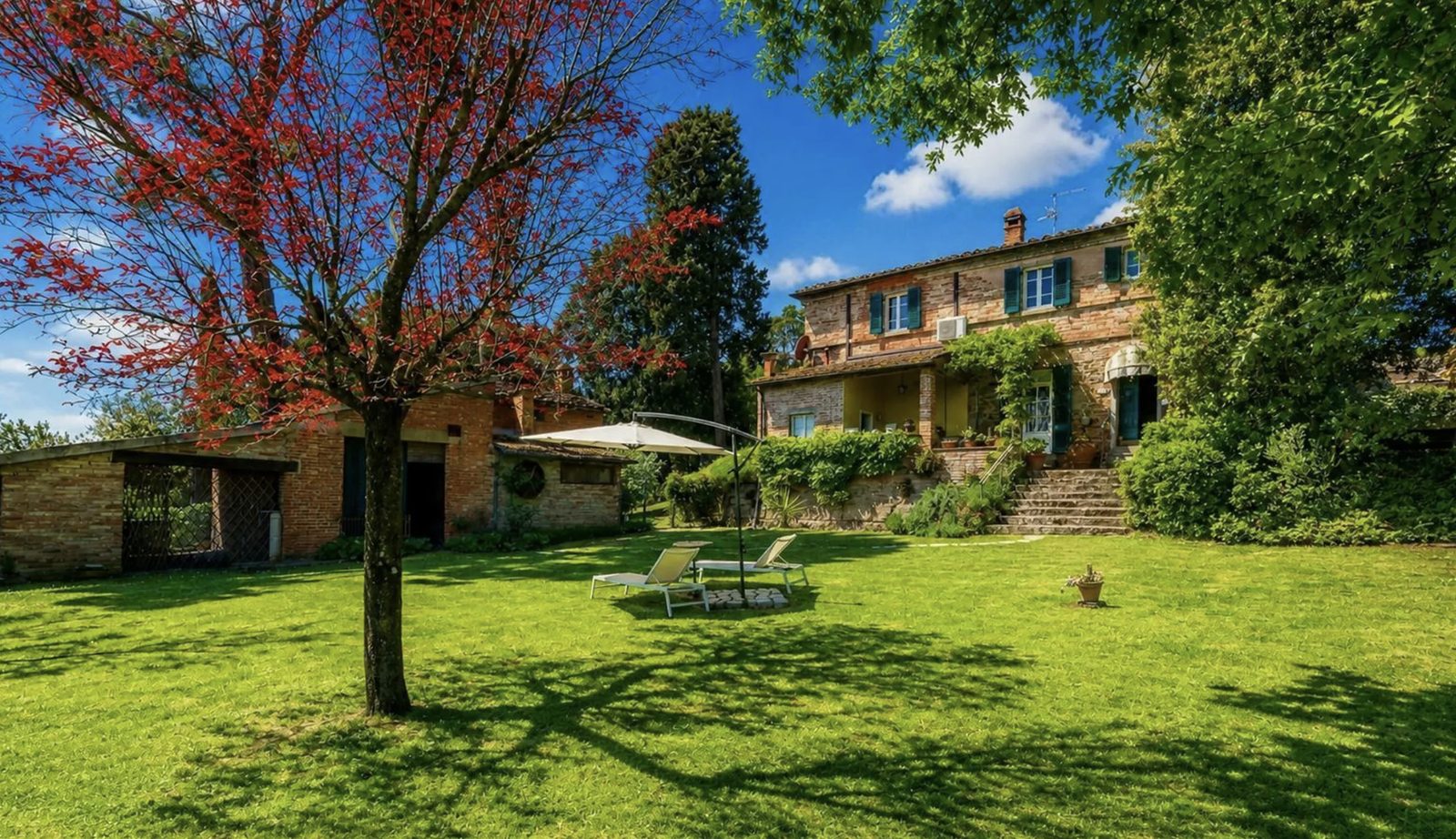
Tuscany, Italy is absorbing a different kind of overflow, less about proximity to Milan and more about a broader shift in what wealthy buyers actually want. Engel & Völkers' 2026 Private Office Market Report found that Italy now leads France, the UAE, and Spain in year-over-year demand growth from international ultra-high-net-worth buyers, and the driver is not size or scale. Outdoor living ranked as the defining luxury feature for 55% of advisors surveyed, with privacy at 15% and cultural experience at 8%. Buyers are trading trophy square footage for a farmhouse with land, a vineyard, or an olive grove embedded in a landscape with real history, which is precisely the Tuscan proposition.
| Market | Realistic Entry Point | What Is Driving Demand |
|---|---|---|
| Milan, Italy | 3M to 6M+ EUR (prime core) | UHNW tax residency under Article 24-bis; near-zero inventory turnover |
| Lake Como, Italy | 2M EUR+ (lake-facing villa) | Milan-adjacent wealth with lakefront scarcity of its own |
| Tuscany, Italy | 400K EUR+ (restored farmhouse) | Lifestyle-over-size shift; cultural and heritage connection |
Americans Are Already the Second-Largest Foreign Buyer Group
This is the detail that gets lost when Milan's billionaire count leads every headline. Industry investment data for 2025 shows Italy's luxury residential market closing the year at approximately 12.3 billion EUR in total transaction volume, up 20% year over year, with the fourth quarter alone reaching 4.5 billion EUR, the strongest quarter since 2020. International buyers accounted for roughly 55% of that volume, and Americans represented approximately 15.8% of the foreign interest, the second-largest nationality after one other group, ahead of most other Western buyer pools entirely.
The nationality breakdown matters because it is not uniform in what it wants. Buyers from India, Brazil, and the UAE showed a strong preference, cited by roughly 53%, for standalone villas, with privacy cited by 78% as a primary motivation. American buyers do not follow that pattern. The Engel & Völkers data specifically calls out US clients concentrated in Tuscany, drawn to properties with what one Siena-based advisor described as a genuine link to local tradition rather than scale or seclusion. American demand is real, sizable, and structurally different from the demand driving Milan's trophy segment, which is exactly why Tuscany, not Milan, is where that demand actually shows up.
The Insight Nobody Is Saying Directly
None of the reporting on Milan's wealth boom, Italy's UHNWI demand growth, or the 2025 investment numbers connects these three facts into one thesis, but put together they say something specific. Milan's own scarcity is functioning as a pricing mechanism that filters demand downward and outward, away from Milan itself and into the two markets positioned to absorb it. For a 1 to 3 million EUR American buyer, competing for Milan's remaining inventory means bidding against UHNW residency buyers backed by a tax regime built for people earning well above 700,000 EUR a year in foreign income. That is not a fight worth entering.
The more useful read is that Lake Como and Tuscany are earlier in their own repricing cycle than Milan is, and the demand driving that repricing, buyers priced out of or uninterested in Milan's trophy segment, is documented in the same data sets that made Milan famous this cycle. A restored farmhouse with land in the Maremma at 400,000 to 800,000 EUR offers a comparable footprint to a rural property in the Hudson Valley at two to three times the cost, without the tax residency complexity Milan increasingly demands of its buyers.
Weighing Milan against Como or Tuscany for your budget? Peter can walk through which market actually fits your price point and intent before you spend a research trip finding out the hard way. Reach out at petertumbas@bhhsne.com or 412.225.0598, or submit a private inquiry.
What This Means for the Next 12 to 18 Months
Milan's inventory constraint is structural, not cyclical. Italians holding family apartments in the historic centre are not selling into this cycle, and the 2026 flat tax increase to 300,000 EUR per year narrows Milan's residency-driven buyer pool without freeing up a single additional unit. That means the pressure redirecting demand into Como and Tuscany is not a temporary spillover. It is the new steady state for how wealth is distributing itself across northern and central Italy.
For American buyers specifically, this argues for evaluating Tuscany and Lake Como on their own terms rather than as a consolation for a Milan purchase that never penciled out. Both markets already have a documented American buyer base, an entry price tier that does not require UHNW-level capital, and a growth trajectory tied to the same wealth migration story driving Milan's headlines, without Milan's near-zero liquidity. See the full Tuscany region guide and Lake Como region guide for the property-level detail, and Milan for American finance professionals if a Milan base is genuinely the goal despite the pricing.
Frequently Asked Questions
Why is Milan real estate too expensive for most American buyers in 2026?
Milan's super-prime core, the Quadrilatero della Moda, now trades near 40,000 EUR per square meter, and prime districts like Brera run closer to 18,500 EUR per square meter. Roughly 3,983 high-net-worth individuals relocated to Italy between 2020 and 2023 with Milan as the top destination, and Italians rarely sell family-held apartments, so turnover is thin. The result is a market priced for residency-driven UHNW buyers, not the 1 to 3 million EUR American buyer this site typically serves.
Is Lake Como or Tuscany a better fit for an American buyer priced out of Milan?
It depends on intent. Lake Como suits a buyer who wants European wealth adjacency and a lakefront asset, with entry around 2 million EUR for a credible lake-facing villa. Tuscany suits a buyer who wants a working or lifestyle property, a farmhouse or vineyard, with entry closer to 400,000 EUR. American buyers in recent industry surveys skew toward Tuscany specifically because they prioritize cultural and heritage connection over the privacy-and-scale priorities that drive villa buyers from other regions.
Are Americans a major buyer group in the Italian luxury property market?
Yes. Industry investment data for 2025 put international buyers at roughly 55% of total Italian luxury property investment, with Americans representing about 15.8% of that foreign interest, the second-largest nationality behind one other group. That places Americans well ahead of most other Western buyer nationalities in the Italian luxury segment, concentrated most heavily in Tuscany and secondary coastal markets rather than in Milan itself.
Did Italy's flat tax increase in 2026 affect the property market?
Yes, indirectly. Italy's Article 24-bis flat tax for new residents rose to 300,000 EUR per year in the 2026 Budget Law, up from 200,000 EUR. That regime targets ultra-high-net-worth individuals relocating tax residency, mainly to Milan, and has no bearing on ordinary property purchases. Its effect on the property market is secondary: it filters Milan's residency-driven demand toward a narrower, wealthier cohort, which does not reduce competition for Milan's limited inventory.
Is now a good time to buy in Lake Como or Tuscany before prices rise further?
Both markets are absorbing demand redirected from a supply-constrained Milan, and 2025 data showed average Italian luxury transaction values up roughly 35% year over year with total investment up 20%. Timing any market against a macro trend carries risk, and neither region is undervalued today. The more useful framing is that both markets are earlier in this repricing cycle than Milan is, which is a different claim than a guaranteed near-term gain.
Evaluating Milan, Como, or Tuscany Against Your Budget?
Peter can walk through which of these three markets actually fits your price point and intent, and connect you with vetted specialists on the ground.
Submit an Inquiry Tuscany Region Guide